
Roses Are Red, Violets Are Blue… Eat Smart, Live Well, Love Your Heart Too


February always makes me think of hearts and there is no better time to give some love to your heart. When we think about protecting our heart, many of us imagine medications, procedures, or high-tech interventions. But the truth is far simpler. Let’s think preventatively and pay attention to what we put on our plate and how our daily habits can affect our health. This makes more of an impact than any prescription.
A large scientific review on cardiovascular health found that everyday lifestyle choices, especially diet, can significantly reduce heart disease risk and even increase longevity. In fact, research shows that people who consistently follow healthy eating patterns, stay active, maintain a healthy weight, don’t smoke, and drink alcohol only in moderation have dramatically lower rates of heart disease.
Here are a few refreshing takeaways from the research, some may surprise you:

Choosing whole foods VS Processed Foods
Eating a diet rich in whole, minimally processed foods is one of the most effective ways to support heart health. Whole foods, like fruits, vegetables, whole grains, nuts, seeds, and lean proteins are naturally packed with fiber, vitamins, minerals, and healthy fats. Whole foods help reduce inflammation, lower cholesterol, and maintain healthy blood pressure. In contrast, highly processed foods often contain added sugars, unhealthy fats, and excess sodium, all of which can increase the risk of cardiovascular disease. By focusing on fresh, nutrient-dense foods and minimizing processed options, you give your heart the nutrients it needs to function at its best.
Try this:
Start paying attention to food labels. Make sure you recognize all the ingredients on the label (who the heck knows what Azodicarbonamide and Carrageenan are?!) and stick to 5 ingredients or less for less processed options. Better yet, opt for foods that do not come in a package and limit the amount of times you eat out.
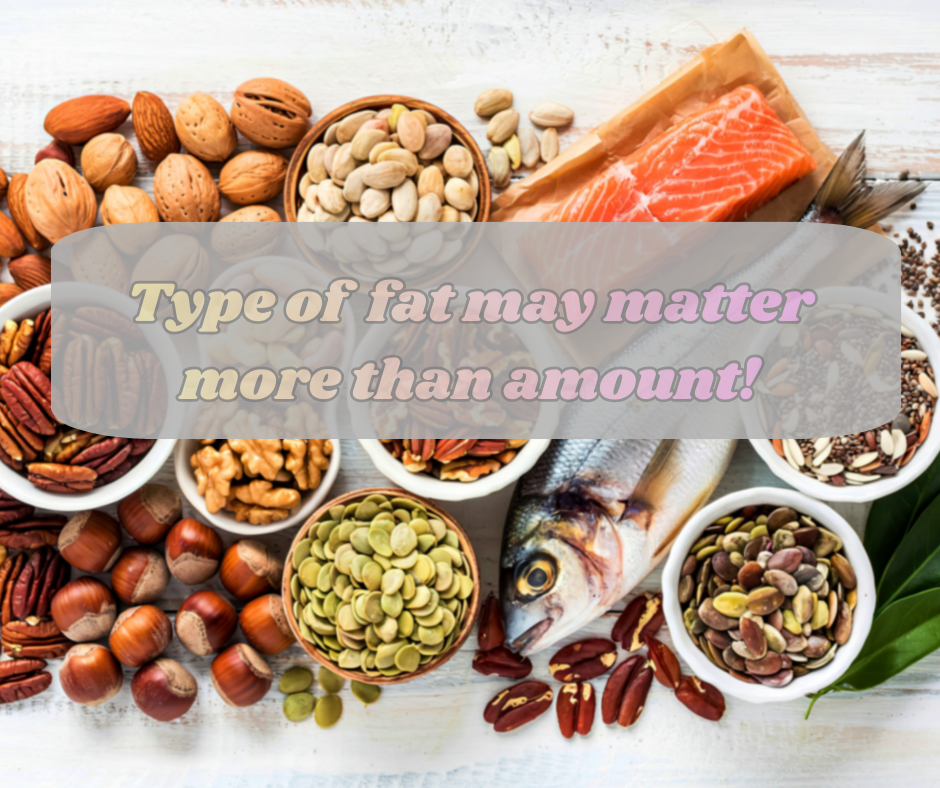
What matters isn't just fat, but the type of fat.
Replacing saturated fats (think butter, whole milk or cheese products or fatty cuts of meat) with polyunsaturated fats—like those found in walnuts, sunflower seeds, or certain oils like olive and avocado oils can reduce heart disease risk by up to 19%.
Try this:
Swap butter for olive oil or choose salmon instead of a cheeseburger.

Not all meats are created equal.
Processed meats such as bacon, sausage, or deli meat increase the risk of heart disease and diabetes, likely due to added sodium and preservatives as well as being high in saturated fats. Opt for more lean meats to decrease your intake of saturated fats.
Try this:
Choose fresh, unprocessed lean meats such as chicken, turkey, fish, lean beef (aim for <10-12 oz per week of red meat).

Some foods we once feared can fit in a heart-healthy diet.
Moderate amounts of eggs, nuts, dark chocolate, and even coffee can be enjoyed without increasing heart disease risk and some may even offer benefits.
Try this:
Have a square of dark chocolate after dinner or enjoy your morning cup of coffee guilt-free. Eggs can be included in moderation as well as nuts and seeds.

Sugar and oversized portions are quiet saboteurs.
Excess added sugar is linked to higher triglycerides and a higher overall calorie intake which can lead to inflammation which can increase your risk of heart disease.
Try this:
Use smaller plates at home (sounds silly, but it works!) and check those food labels for added sugars.

Vitamin D matters for more than just bones.
Low vitamin D levels are associated with a higher risk of heart disease, hypertension, and even diabetes
Try this:
Get outside for 10 minutes of sunshine most days or ask your doctor about supplementation. Vitamin D is difficult to find in foods, some great sources are eggs, fatty fish, & mushrooms
Lifestyle Habits That Protect Your Heart
A heart-healthy lifestyle is more than just what we put on our plates. Daily habits from how much we move to how well we sleep play a powerful role in lowering the risk of cardiovascular disease.

Move with purpose.
Regular physical activity is one of the strongest predictors of heart health. Aim for a combination of aerobic exercise (like walking, biking, or swimming) and strength training to improve circulation, lower blood pressure, and support healthy cholesterol levels.
Try this:
Avoid long periods of sitting or inactivity. Get up and walk, do squats for at least 5-10 min every 60-90 minutes. Every movement counts! Take the stairs, park farther away, and build movement breaks into the day.

Maintain a healthy weight.
Excess body weight, especially around the midsection, places additional stress on the heart and increases the risk of cardiovascular disease.
Try this:
If weight loss is recommended, a modest caloric deficit along with balanced nutrition and movement can make a significant impact. Focus on progress, not perfection.
Eliminate smoking and be mindful of alcohol

If you smoke, quitting is one of the most powerful actions you can take, tobacco use dramatically raises heart-disease risk, while quitting leads to immediate and long-term health benefits. Alcohol should be kept in moderation; heavy drinking harms the heart.

Prioritize restorative sleep.
Sleep is not a luxury, it’s a vital piece of heart health. Let me say that again, getting 7-9 hours of good quality sleep each night is essential! Getting consistent, quality sleep helps regulate blood pressure, appetite, hormones, and stress, making it an essential partner to diet and exercise.
Try this:
Keep a consistent sleep/wake schedule, get sunlight 1st thing in the morning, close your eating window 2-3 hours before bed, sleep in a cool environment, shut off bluelight devices 1-2 hours before bed, and create a sleep ritual to trigger your body that it is time for sleep.

Cholesterol Levels- What do they really mean?
I couldn’t write about heart health without mentioning cholesterol levels.
Helpful Healthy Ranges
· Total Cholesterol: Generally desirable: < 200 mg/dL
· HDL (“good” cholesterol): Optimal: ≥ 60 mg/dL (higher is better)
· LDL (“bad” cholesterol): Optimal: < 100 mg/dL
· Total Cholesterol–to–HDL Ratio: Ideally < 3.5:1(Lower is better; it reflects a higher proportion of protective HDL compared to total cholesterol.)
· Total Cholesterol–to–Triglyceride Ratio: Ideally < 2:1(A lower ratio suggests better metabolic health and more favorable lipid balance.)
These ranges help put your numbers into context but, beyond a standard cholesterol panel, there are several additional lab values that can help identify whether your cholesterol levels should be a concern. ApoB measures the number of “dangerous” particles are present and can better reflect plaque-building risk which creates atherosclerosis. Lp(a) is a genetically determined lipoprotein that can raise cardiovascular risk even when LDL appears normal High Lp(a) represent LDL that is more sticky, more inflammatory & more likely to deposit in arteries. Homocysteine is an amino acid; elevated levels may increase inflammation and damage blood vessels. hs-CRP (high-sensitivity C-reactive protein) is a marker of inflammation in the arteries, higher levels can signal increased cardiovascular risk. These tests, combined with your cholesterol panel, offer a more complete picture of heart health. So, if you or your doctor are concerned about your cholesterol numbers, ask for these labs as well. If you have trouble getting these labs and/or your doctor does not explain them to you; please reach out to me and I can help explain what your cholesterol numbers are really telling you and if you should be concerned.
Bottom line
Healthy eating isn’t about perfection, it’s about patterns.
Focus on healthy, whole foods to lower inflammation is the true key!
Plenty of fruits and veggies (eat the rainbow)
Whole grains
Lean proteins (especially fatty fish)
Healthy fats like nuts, seeds, avocado oil and olive oil
When in doubt, follow this simple plate method:
½ plate veggies + ¼ plate lean protein + ¼ plate whole grains + healthy fats (nuts/olive oil)
Healthy habits build powerful protection. By moving more, managing weight, prioritizing sleep, avoiding smoking, and staying mindful with alcohol we can support a stronger heart for years to come.
Small changes done consistently make the biggest difference. Your heart doesn’t need a complete overhaul, it just needs daily care.
Your fork and your daily habits are the most powerful health tools you own to give some love to your heart!

If you want to learn more, grab copies of my Nutrition & Heart Health Guide &/or my Heart Healthy Recipe Packs below.

Looking for a personalized approach and learn what you can do be healthy & happy and stop stressing about food! Let's chat!
References:
Pryde MM, Kannel WB. Efficacy of dietary behavior modification for preserving cardiovascular health and longevity. Cardiol Res Pract. 2010 Dec 28;2011:820457. doi: 10.4061/2011/820457. PMID: 21253499; PMCID: PMC3021873.
Assmann G, Cullen P, Schulte H. Simple scoring scheme for calculating the risk of acute coronary events based on the 10-year follow-up of the prospective cardiovascular Münster (PROCAM) study. Circulation. 2002 Jan 22;105(3):310-5. doi: 10.1161/hc0302.102575. Erratum in: Circulation 2002 Feb 19;105(7):900. PMID: 11804985.
Sniderman AD, Thanassoulis G, Glavinovic T, Navar AM, Pencina M, Catapano A, Ference BA. Apolipoprotein B Particles and Cardiovascular Disease: A Narrative Review. JAMA Cardiol. 2019 Dec 1;4(12):1287-1295. doi: 10.1001/jamacardio.2019.3780. PMID: 31642874; PMCID: PMC7369156.
Tsimikas S. A Test in Context: Lipoprotein(a): Diagnosis, Prognosis, Controversies, and Emerging Therapies. J Am Coll Cardiol. 2017 Feb 14;69(6):692-711. doi: 10.1016/j.jacc.2016.11.042. PMID: 28183512.


Disclaimer: The purpose of this blog post is not to act as a personal healthcare professional to any reader and is not meant to directly or indirectly diagnose disease, dispense medical advice, or prescribe the use of any products or services as treatment for sickness or disease. This information is for educational purposes only. You should always cooperate with a licensed health professional of your choice to create optimal health. Please consult your physician before implementing any of the strategies mentioned in this or starting any diet, exercise, or health program—especially if you are pregnant or nursing. Any application or use of the information, resources, or recommendations contained here is at your own ris


Comments